From India to the World: The Step-by-Step Guide to Selling on Amazon USA and Canada
Want to sell on Amazon USA from India? Learn how to navigate sourcing from China vs India, handle Amazon FBA, manage HSN codes, and build a profitable private label brand in 2024.
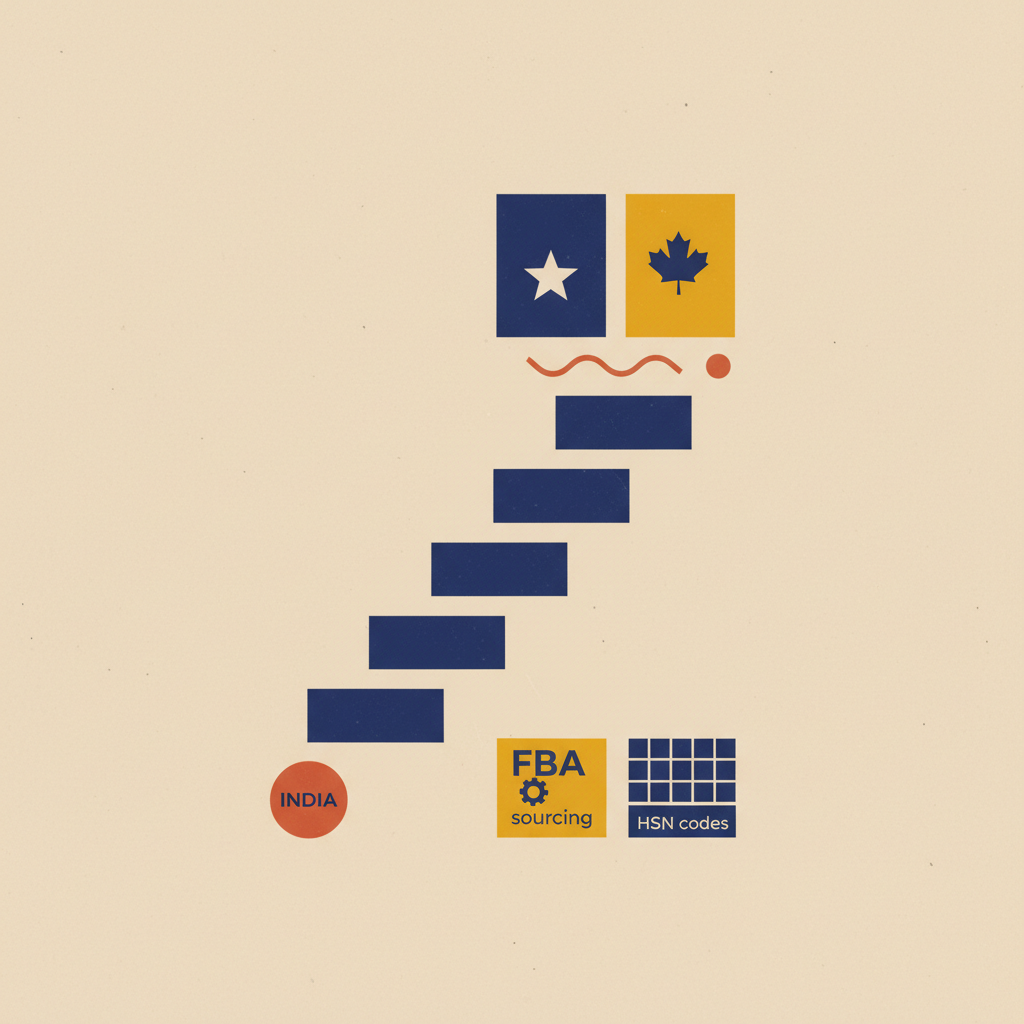
Table of contents
- How to Start Selling on Amazon USA and Canada from India: A Practical Success Roadmap
- Quick Answer: Can Indians Sell on Amazon USA?
- 1. Finding Your Product: Sourcing from India vs. China
- Sourcing from China
- Sourcing from India (The "Make in India" Advantage)
- 2. Navigating Amazon FBA: Prime is Non-Negotiable
- Why you must use Amazon FBA:
- 3. The Technical Basics: HSN Codes and Compliance
- What is an HSN Code?
- 4. Building a "Private Label" Brand
- The Innovation Process:
- 5. Overcoming the "Tariff War" Anxiety
- Summary: Your 30-Day Checklist
- Related Questions
How to Start Selling on Amazon USA and Canada from India: A Practical Success Roadmap
Selling on Amazon Global (USA, Canada, and Europe) has become one of the most viable ways for Indian entrepreneurs to build a dollar-denominated income. Whether you are an organic farmer in Ambala or a sourcing expert in Delhi, the opportunity to scale a brand internationally is massive.
In a recent strategy session, we discussed the journey of moving from "local sourcing" to "global branding." This guide breaks down the exact steps to navigate sourcing, logistics, and brand building.
Quick Answer: Can Indians Sell on Amazon USA?
Yes. Indian residents can easily sell on Amazon USA and Canada. You need a registered business (or individual account), a GST number (for export purposes), an IEC (Import Export Code), and a professional Amazon Seller Central account. Most sellers use Amazon FBA (Fulfillment by Amazon), where you ship bulk inventory to US warehouses, and Amazon handles the shipping, returns, and customer service.
1. Finding Your Product: Sourcing from India vs. China
One of the most common questions is whether to source products locally or from China. The answer depends entirely on your category.
Sourcing from China
If you are looking for high-tech gadgets, complex electronics, or mass-produced items like stainless steel water bottles, China remains the leader. They have the "molds" and infrastructure to innovate quickly. However, you must account for US-China tariffs and customs duties.
Sourcing from India (The "Make in India" Advantage)
India is becoming a powerhouse for specific categories:
- Handloom & Textiles: Bed sheets, rugs, and organic cotton products.
- Gardening Tools: High-quality metal and wooden tools.
- Organic Products: Moringa, Turmeric, and Ayurvedic supplements.
- Home Decor: Artisanal wood and brass items.
Why source from India? You avoid the high US-China tariffs, you have better control over quality, and "Made in India" carries a premium story for organic and handcrafted goods.
2. Navigating Amazon FBA: Prime is Non-Negotiable
A common mistake beginners make is trying to ship products directly from India to the US customer every time an order comes in (Merchant Fulfillment).
Why you must use Amazon FBA:
- The Prime Badge: Customers in the US explicitly search for "Prime" products to get 1-2 day delivery.
- Search Ranking: Amazon’s algorithm prioritizes FBA listings.
- Operations: You don't have to worry about US time zones or customer support. You ship 500 units once; Amazon takes over the rest.
| Feature | Merchant Fulfilled (FBM) | Amazon FBA |
|---|---|---|
| Delivery Speed | 10-15 Days (from India) | 1-2 Days (Local) |
| Cost | High per-unit shipping | Cheap bulk shipping |
| Trust | Lower | Very High (Prime Badge) |
| Complexity | High (Managing every order) | Low (Amazon manages) |
3. The Technical Basics: HSN Codes and Compliance
Before you ship your first box, you need to understand the "Language of Customs."
What is an HSN Code?
The Harmonized System of Nomenclature (HSN) is a 6-to-8 digit code used worldwide to classify goods. It determines how much customs duty you pay.
- Example: A plastic water bottle and a glass water bottle have different HSN codes.
- Tip: Always verify your HSN code with a freight forwarder before manufacturing. Applying the wrong code can lead to legal scrutiny or unexpected taxes.
4. Building a "Private Label" Brand
Don't just sell a "generic" product. The goal is to build a Private Label Brand. This means you take a common product (like a garden trowel), improve its design (better grip, rust-proof coating), and put your own brand name on it.
The Innovation Process:
- Analyze Competitors: Use tools like Helium 10 to see what customers are complaining about in current reviews.
- Product Design: Change the texture, the color, or the packaging.
- Digital Testing: Before manufacturing 1,000 units, you can test your product's appeal through 3D renders and digital mockups.
- Packaging: Your packaging file is sent to the factory (in India or China). They manufacture the product and pack it in your branded boxes.
5. Overcoming the "Tariff War" Anxiety
There is a lot of talk about US-China tariffs (Section 301 duties). While these impact Chinese imports, they rarely "kill" a business because the costs are usually passed to the consumer. However, this creates a massive opportunity for Indian exporters. If a Chinese water bottle has a 25% tariff and the Indian version has 0-5%, the Indian seller has a significant price advantage.
Summary: Your 30-Day Checklist
- Education: Don't rely solely on random YouTube videos. Follow a structured "Base Camp" approach to learn the foundations (HSN codes, Amazon algorithms, and sourcing).
- Market Research: Use data tools (Helium 10) to find a niche with high demand but low-quality competition.
- Sourcing: Decide between India (Handloom/Gardening/Organic) and China (Specialized manufacturing).
- Logistics: Find a reliable freight forwarder who understands "Door-to-Door" shipping from India to US Amazon warehouses.
- Launch: Create a high-quality listing with professional photography and SEO-optimized titles.
Related Questions
- Do I need a US company to sell on Amazon USA? No, you can use your Indian entity.
- What is the minimum budget? Typically, $3,000–$5,000 covers inventory, shipping, and initial software tools.
- Is Amazon Europe different? Yes, Europe (UK/Germany) requires VAT registration, which is more complex than the US sales tax system.
Ready to start? Focus on moving from a "Reseller" mindset to a "Brand Owner" mindset. That is where the real profit lies.