Selling on Amazon USA vs. Canada: The Ultimate Strategy for New Brand Owners
Thinking of launching a brand on Amazon? We compare the US vs. Canada marketplaces, discuss how to handle logistics via MCF, and explain why building a brand today requires an AI-powered UGC strategy.
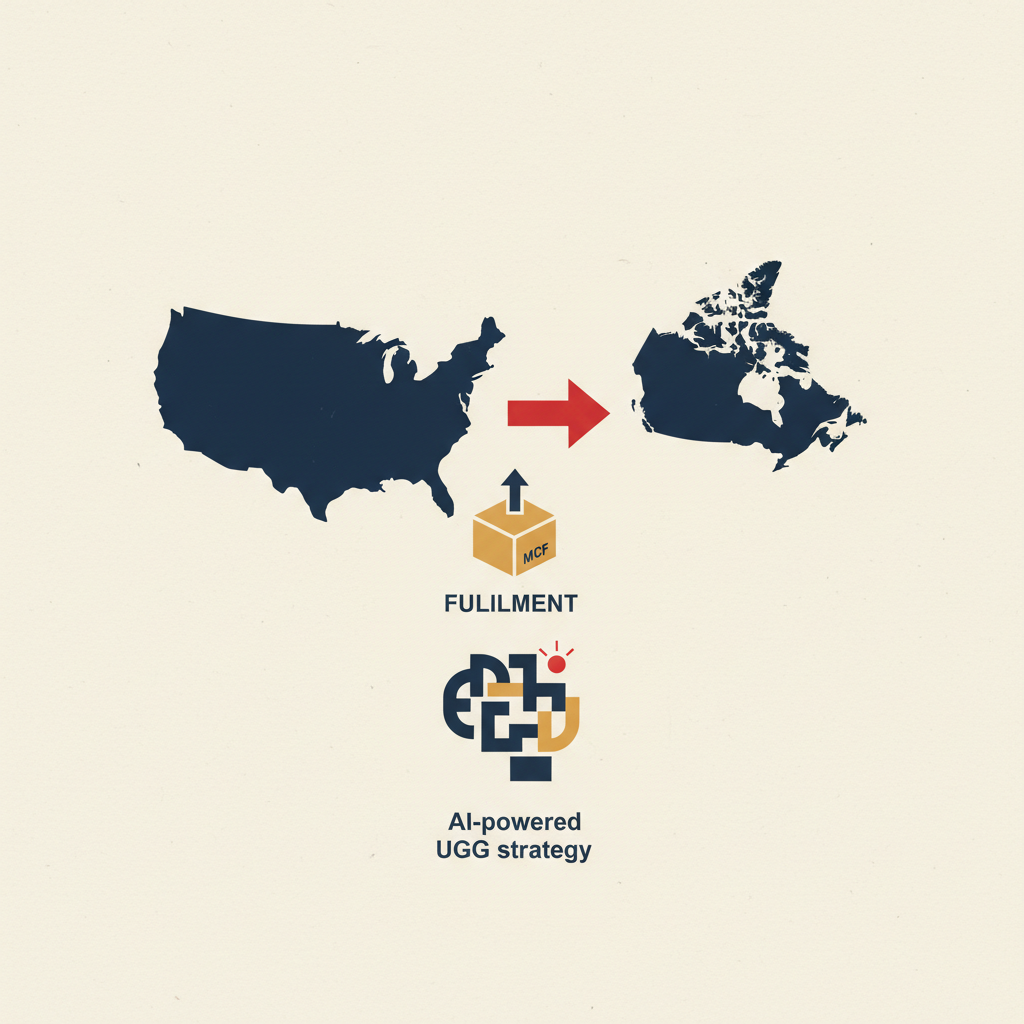
Table of contents
- Selling on Amazon USA vs. Canada: Is the US Market Still the Best Choice for New Brands?
- Quick Answer: Should you launch in the USA or Canada?
- 1. The Market Size vs. Market Share Paradox
- Comparison Table: Marketplace Metrics at a Glance
- 2. Navigating the "Tariff Scare"
- 3. Building a Brand, Not Just a Product Listing
- Focus on UGC (User-Generated Content)
- 4. Why Germany and the UK are the Hidden Gems
- 5. Logistics Strategy: Amazon MCF vs. 3PL
- What is Amazon MCF?
- Handling Returns
- FAQ: Selling Abroad as an Indian Brand
- Summary and Next Steps
Selling on Amazon USA vs. Canada: Is the US Market Still the Best Choice for New Brands?
The global e-commerce landscape is shifting. For years, the standard advice for any new seller was simple: "Go West." Specifically, go to the United States. With the largest consumer market and a robust logistics network, Amazon USA was the holy grail.
However, recent economic discussions, potential tariff hikes (up to 125% on Chinese goods in some political projections), and extreme competition in the US have forced new brand owners to reconsider. Should you stick with the US, or is it time to look at Canada, the UK, or Germany as your entry point?
In this guide, we’ll break down the pros and cons of these marketplaces, how to build a brand that lasts, and why your logistics strategy might be simpler than you think.
Quick Answer: Should you launch in the USA or Canada?
Short answer: While the USA offers the highest volume, Canada is often a better "soft launch" market because of lower competition and easier logistical hurdles for cross-border sellers. However, for standardized products like iPhone accessories, the USA market is still the primary target for true scale, provided you have a diverse manufacturing and shipping strategy to hedge against potential tariffs.
1. The Market Size vs. Market Share Paradox
When comparing India, Canada, and the USA, the numbers can be deceiving.
- India: Boasts a massive population of 1.4 billion, but its iPhone market share is roughly 4%. Consumers are highly price-sensitive, often preferring a ₹1,000 case over a premium ₹5,000 product.
- Canada: A much smaller population (approx. 38 million), but the iPhone market share is nearly 60%.
- USA: The ultimate powerhouse with high iPhone penetration and a consumer base willing to pay a premium for brand story and quality.
Comparison Table: Marketplace Metrics at a Glance
| Marketplace | Population | iPhone Market Share | Price Sensitivity | Competition Level |
|---|---|---|---|---|
| USA | ~333 Million | ~55-60% | Low to Moderate | High |
| Canada | ~38 Million | ~60% | Moderate | Low |
| India | ~1.4 Billion | ~4% | Very High | High (Price Wars) |
| Germany | ~83 Million | ~30% | Low | Moderate |
2. Navigating the "Tariff Scare"
Many new sellers worry about potential 125% tariffs on Chinese goods entering the US. While these figures are often used as negotiation tactics in international trade, they highlight a crucial lesson: Don't put all your eggs in one basket.
If your manufacturing is based in China, consider shipping smaller batches via air to test the market. If you are manufacturing in India or other regions, the US market remains wide open. Standardized products—like phone cases—are "world-friendly." Size and dimensions don't change by region, meaning you can pivot your inventory from the US to the UK or Canada with just a packaging update.
3. Building a Brand, Not Just a Product Listing
To hit six or seven figures, you cannot just "flip products" on Amazon. You need to build a brand asset.
Focus on UGC (User-Generated Content)
People don't buy products; they buy the experience others have with those products.
- Micro-Influencers: Target creators with 10k to 100k followers. They have higher engagement and are often willing to work on a "gifted" basis or for a small affiliate fee.
- UGC Creators: Use platforms like Upwork or Fiverr to hire North American creators. For a US/Canada audience, an accent that matches the demographic builds immediate trust.
- AI Integration: Tools like 11 Labs (for voiceovers) and HeyGen (for video avatars) can help you scale content. You can take one piece of footage and create 50 different "hooks" to test in your Meta Ads without hiring 50 different actors.
4. Why Germany and the UK are the Hidden Gems
If you find the US too crowded, Western Europe is a massive opportunity. Germany is often the entry point for Europe.
- Premium Demand: European consumers value sustainability and high-quality materials.
- Logistics: While VAT (Value Added Tax) adds a layer of complexity, Amazon’s Pan-European FBA program makes it relatively easy to store goods in one country and sell in several others.
5. Logistics Strategy: Amazon MCF vs. 3PL
A common question for new brand owners is how to fulfill orders from their Shopify store while keeping a "premium" feel.
What is Amazon MCF?
Amazon Multi-Channel Fulfillment (MCF) allows you to use your Amazon FBA inventory to ship orders from your own website, eBay, or Walmart.
The Common Myth: "My customers will receive a box with a giant Amazon logo, and it looks unprofessional." The Reality: Amazon now offers unbranded packaging. You can opt-out of Amazon-branded boxes for a small additional fee, keeping your brand identity intact.
Handling Returns
In the West, return culture is different than in India. Return rates for fitting issues on standardized products (like iPhone cases) are generally low. Many brands choose to simply write off damaged returns rather than paying for reverse logistics. If a customer proves a manufacturing defect, sending a free replacement is often cheaper—and builds more loyalty—than paying to ship it back.
FAQ: Selling Abroad as an Indian Brand
Can I sell on Amazon Canada if I have a US account? Yes. Amazon’s North American Unified Account allows you to manage sales in the USA, Canada, and Mexico from a single dashboard.
Do I need a local company in Canada to sell there? Usually, no. You can sell as a non-resident importer, though you will need to register for GST (Goods and Services Tax) if your sales exceed certain thresholds.
Is iPhone 16 Pro Max a good niche for 2025? It is highly competitive. To win, you shouldn't just sell a "case." You should sell a specific aesthetic (minimalist, rugged, luxury) and back it with strong UGC marketing on Instagram and TikTok.
Is it better to ship by sea or air? For "small and light" products like phone cases or jewelry, air shipment is often more cost-effective for your first 200–500 units. It allows you to get to market faster and test demand without waiting 45 days for a ship.
Summary and Next Steps
Don't let geopolitical news paralyze your brand launch. The US is a volume play; Canada is a margin and test play.
- Validate on Amazon: Use FBA to handle the heavy lifting of logistics.
- Build Your Site: Launch a Shopify store to own your customer data.
- Drive Traffic: Use micro-influencers and AI-powered UGC to fuel Meta Ads.
- Scale: Once you have "traction" in one market, the standardized nature of modern tech products makes it easy to expand to the next.
Related Questions: How to register for VAT in Germany? What are the best shipping aggregators for Indian exports? How to set up an Amazon US account from India?